Monday, March 27, 2017

Tornado Drill?

Story of the day:
One summer, I offered to teach summer school in Muscatine, Iowa for the migrant children of southeast Iowa. It was just after 3 o'clock, the students were exhausted and ready to go home after a long day, and the buses were en route to school. All of a sudden, the tornado sirens went off! We got the students lined up, hunched over and covering their heads in front of the lockers in the hallway. The students had mixed emotions.  During the 45 minute real tornado, some students fell asleep while on their knees, other students cried because they were scared. I stupidly stood and watched the funnel cloud fly past the school, instead of joining the students on the ground. It was a crazy memory that nobody will forget!


Advice for Teachers:
Make modifications and/or accommodations for students based on their ESL levels. For example, WIDA states that students can do different tasks at the different levels:
At level 1, students can Matching key content-related terms and ideas to images, graphs, icons, or diagrams. 
At level 2, students can locate main ideas in a series of related sentences.
At level 3, students can identify detailed descriptions, procedures, and information in paragraphs.
At level 4, students can create narrative or informational extended text of past events or experiences. 


Friday, March 24, 2017

Active shooter drill

Story of the day:
One day, shortly after the Columbine, CO shootings, the elementary school decided to have am active shooter drill. The morning it happened, I had six non-English speakers in my room. Because of the language barrier, I could not explain what, why and how the drill works. Instead, after locking my classroom door, I had to model what we had to do. I demonstrated to the students how to get under their desks and cover their heads to hide from the shooter. The students thought I was a little crazy, but they followed directions.


ESL advice for the day:
Pre-teach important vocabulary:

  • Write ELL friendly definitions and post them in the room
  • Choose different strategies to teach the words
  • Ask your ESL teacher or English teacher to give you ideas on how to teach the words

Tuesday, March 21, 2017

Parent Meeting Question?

Story:
When I was an itinerant teacher at an intermediate unit, I conducted a meeting with the principal, special education teacher, and my student's father. The translator was late because she got lost trying to find the school in rural Pennsylvania. She finally showed up during the last five minutes of the meeting. She asked the father if he had any questions. Mind you, this Guatemalan man only had two years of education. His question was, "What is math?" He knew it as matematicas.


Effective Lesson Plans for ELLS include:

  • Building background knowledge
    • Create interest by using pictures, realia or personal experiences
    • Build text-specific knowledge by providing students with information from the text beforehand
    • Develop concept background by explaining difficult concepts and labeling them with key words
    • Establish the purpose for reading, ex. KWL
    • Select a specific comprehension strategy for the students to use
www.Colorincolorado.org, How to Develop a Lesson Plan that Includes ELLs. 

Monday, March 20, 2017

Wanted: A Better Education

Story of the Day:
Back in the late 1990s, many teachers in my school did not want to have ELLs in their classrooms. They often sent the students to me asking me to "fix them!" It was almost impossible to collaborate with teachers with this kind of mentality. I'm hoping that those teachers have since retired and a more open group of educators took their places.
One family came into my suburban Chicago school from India. They were a traditional Muslim family who came to America for a better education for their children. Two of their children were enrolled in the sixth grade. They were embarrassed, however, because their eldest boy, Mohammad, had a disability. When he started at the school, he could not figure out the pattern to put his chair on his desk as the other twelve year students were all doing at the end of the day. His sister, Tahoor, quietly helped him with these activities, knowing that he was mentally incapable of following the basic directions. Shortly thereafter, we called their parents in for a meeting to find out more background knowledge, so we could figure out how to provide assistance for Mohammad. It turns out that mom home schooled him when they lived in India because they were scared that Mohammad would get sent away to an institution for the mentally handicapped. Before the first semester was through, he was placed in a self-contained special education classroom that best suited his needs.


Advice for Content Teachers:
1. Focus on improving academic language. This will help them understand your content.
2. Look beyond vocabulary by focusing on the "bricks and mortar," multiple meaning words, and cognates.
3. Plan for purpose and products: Use academic language to write a lab report, orally explain a math problem, listen to and compare two famous speeches, and compare a scene from a novel and a movie.
Breiseth, Lydia. Academic Language and ELLS: What Teachers Need to Know. 

Sunday, March 19, 2017

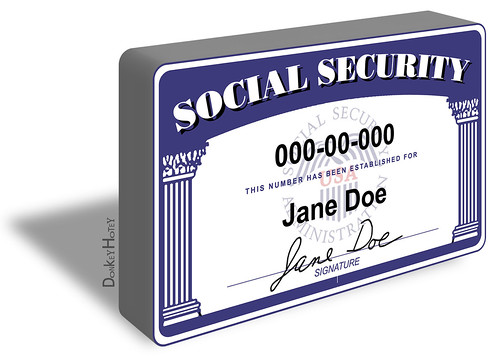
A Story about social security cards (it's funny)

When my children were babies, I was blessed to teach ESL to adults who were not literate in their first language. At this time, I had a high level class for students who were interested in getting into the GED program. We had a conversation about the importance of learning your social security number and not sharing it with other people.  Then, all of a sudden, one student asked, "Which one?" This particular student was undocumented and had two different social security numbers she was working under.


One word of advice when working with adult ELLs: speak slow and use simple English.
Also, don't assume they have background knowledge when teaching a new concept. For example, on St. Patrick's Day, my students did not understand why they were being pinched.

Saturday, March 18, 2017

My first ESL news blog for DCTS

February 9, 2019 -

While teaching during my sixth year at DCTS, I'd like to start providing a blog of extra information, optional articles, and links to great resources to help provide effective ESL strategies to our ELL population. I plan to share stories of students with either anonymity or nicknames to increase your knowledge of what background knowledge or lack thereof may be sitting in your classroom. I have 19 years of ESL training from kindergarten to adults learning English. I am excited to start my blog right now.

My first story that I'd like to share with you comes from when I taught in suburban Chicago in the year 2000. The boy, Michael, was in sixth grade, illiterate, but great listening and speaking skills. His family came to the US when he was in the 4th grade after a long trip to flee Iraq. Living in Iraq, every male was required to join the military and serve under Saddam Hussein. His father was serving his country until that one dreadful day. Hussein had ordered Michael's father to shoot an innocent citizen in the square as part of his duty. Michael's father refused to follow through because he knew, that as a Christian man, it was not the proper act to commit. A couple of days later, Hussein had ordered another man to take Michael, who was three years old at the time, to be burnt by a faithful soldier on the leg. Shortly thereafter, Michael and his family fled to Syria where they lived through his third grade year. They came to the US as refugees when Michael was in the 4th grade. He had never been in school or learned to read or write in any language. His teachers made him learn to write in cursive and taught him to listen and speak English. However, when he came to me in 6th grade, he still could not read or write, except for his name. By the end of 6th grade, before moving on to middle school, the evaluation team decided that it was in his best interest to be placed in a self-contained, emotional support classroom.


One must read article to improve your knowledge of ELLs today is the following link:
http://www.colorincolorado.org/article/essential-actions-15-research-based-practices-increase-ell-student-achievement